
1. Reconcile history before forecasting
Outcome: prove the opening statements reconcile and defend an operating driver. Prerequisite: F03–F06.
Ridgeway Pumps earns 96 in 2026 and ends with just 40 of cash. Management wants to grow, spend 132 on equipment and software, repay its lender and keep at least 75 in cash. Can the plan fund itself? All monetary figures are USD thousands. Volume is thousands of pumps; price is USD per pump. The business and source pack are original fictional teaching data.
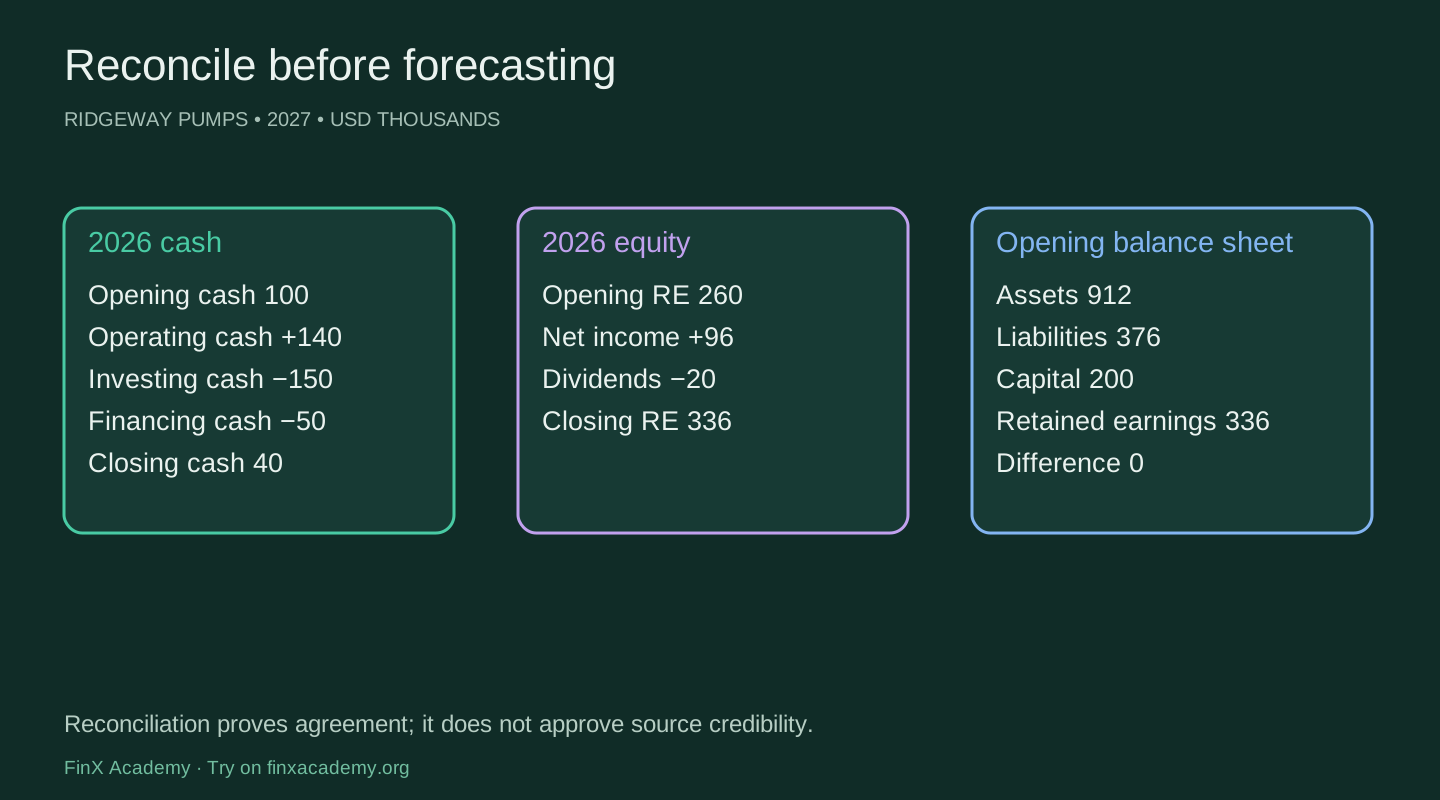
Start with the supplied 2024 opening balances and the 2025–2026 statements. Do not estimate retained earnings to make a forecast balance. In 2026, assets of 912 equal operating liabilities and debt of 376 plus equity of 536. Retained earnings independently roll from 260 to 336: 260 + 96 profit − 20 dividends. Cash rolls from 100 to 40: 100 + 140 operating cash − 150 investing cash − 50 financing cash. If those controls disagree, investigate source periods, signs, missing accounts and transactions before adding forecasts.
| Historical driver | 2025 | 2026 | What it can support |
|---|---|---|---|
| Volume, thousand pumps | 10 | 12 | 20% historical volume growth |
| Price, USD/pump | 100 | 100 | No observed price growth |
| COGS / revenue | 60% | 60% | A base starting point, not a guaranteed margin |
| Receivables / revenue | 14% | 15% | Collection timing deserves investigation |
| Inventory / COGS | 20% | 20.83% | Closing inventory increased faster than sales |
The base forecast assumes 15% volume growth and 3% pricing in 2027. Those are management assumptions, not historical facts. Defend them with order backlog, capacity, customer renewal and pricing evidence. Two observations cannot establish a reliable trend or prove that higher prices will not reduce volume. Use the downside to expose the consequence of being wrong.
F06 supplied the architecture. Here, Assumptions feeds Operations, Working capital, Assets and Funding. Statements reads their results. Review observes reconciliations and never funds the business or changes another schedule. Historical inputs stay separate from scenario inputs. Forecasting begins from the reconciled 2026 close, not an invented opening balance.
Practice: reconcile 2026 retained earnings and cash, then calculate revenue growth as volume and price effects. State one additional source needed to defend next year's volume assumption.
Hint 1: cash is a stock and CFO is a period flow. Hint 2: include capex, principal and dividends. Checkpoint: revenue grew 20%; cash fell 60; retained earnings grew 76.
Review judgment: numerical checks prove the supplied records reconcile. They cannot prove the source pack is complete or that management's assumptions are credible.