
Live
Outcome: derive incremental after-tax project cash flows, including working capital and disposal proceeds. Prerequisites: F01 and F05; use F07 for statement integration.
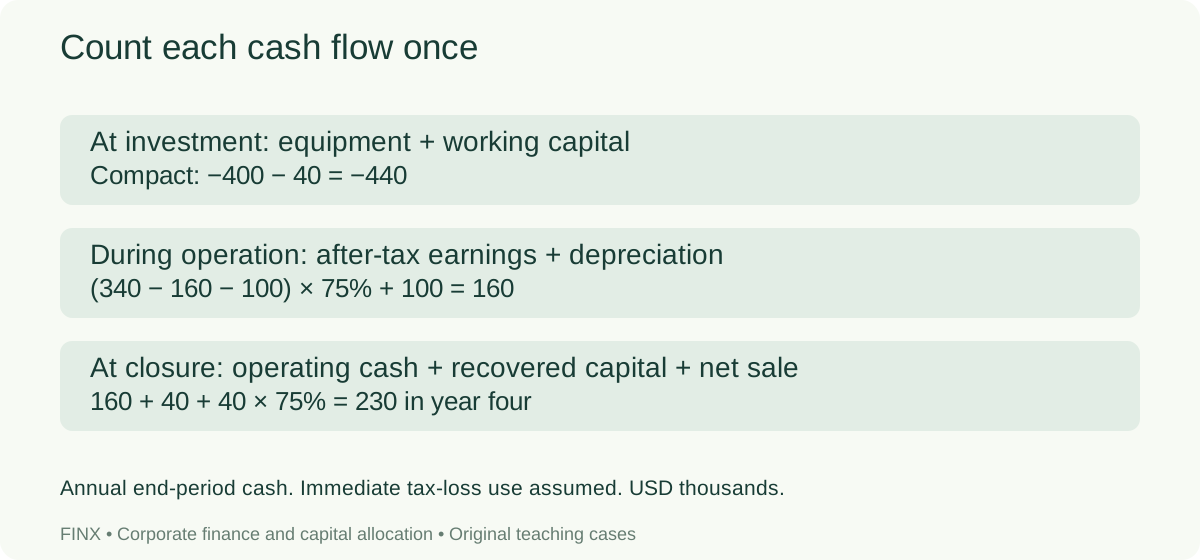
Larch Components can install one of two production lines. The Compact line costs 400 and ties up another 40 in inventory and receivables. The Automated line costs 700 and ties up 70. Both operate for four years. All amounts are USD thousands. These are original fictional assumptions, not company disclosures or current tax rules.
The relevant question is what changes if Larch accepts the project. A 20 feasibility study already paid is sunk. A 12 annual rental income forgone by using a building is an opportunity cost, even when no new invoice arrives. Include sales lost elsewhere through cannibalization. Exclude allocated head-office costs that will not change. Include incremental support staff or capacity costs even if they sit in a different department.
Separate operating investment from financing. This case discounts cash available to debt and equity investors at a project WACC. Deducting interest in those flows would count financing again. A cash flow after debt payments instead needs an equity-specific model and discount rate.
| Annual operating schedule | Compact | Automated |
|---|---|---|
| Revenue | 340.00 | 570.00 |
| Cash operating cost | (160.00) | (270.00) |
| Straight-line depreciation | (100.00) | (175.00) |
| EBIT | 80.00 | 125.00 |
| Incremental tax at 25% | (20.00) | (31.25) |
| Add back depreciation | 100.00 | 175.00 |
| Operating cash flow | 160.00 | 268.75 |
The 25% rate and straight-line tax depreciation are teaching assumptions. The parent has enough taxable profit to use incremental losses immediately. If it cannot, loss carryforwards and cash-tax timing need a different schedule. Book depreciation does not automatically determine tax deductions in practice.
At time zero, buy the line and fund working capital: −440 for Compact and −770 for Automated. Working capital remains flat during operation and is fully recovered after year four. Depreciation takes tax book value to zero. Compact sells for 40, giving after-tax proceeds of 40 − (40 − 0) × 25% = 30. Add 40 of working-capital recovery: final cash is 230. Automated final cash is 398.75: operating cash 268.75, after-tax sale 60 and recovery 70.
Check: Compact cash flows are −440, 160, 160, 160, 230. Automated flows are −770, 268.75, 268.75, 268.75, 398.75. Recover working capital once; it is not revenue or taxable operating profit in this case. With a nonzero disposal tax basis, use sale − tax × (sale − tax basis), subject to the assumed tax treatment.
Try it: A proposed line has annual sales 420, cash costs 230, forgone rent 12 and cannibalized after-variable-cost contribution 18. Depreciation is 100. Derive EBIT and operating cash at 25% tax before looking below.
Reasoned solution: incremental cash operating surplus is 160; EBIT is 60; tax is 15; operating cash is 145. The already-paid study is excluded. Do not subtract its 20 again.
Transfer question: If only 75% of the 40 working-capital balance is recovered, how much lower is the final cash flow? It falls by 10. At a 10% annual discount rate, value today falls by 10 / 1.1^4 = 6.83.
Optional reading: OpenStax capital budgeting.