
1. Post both sides of a transaction
An analyst needs to explain what happened before deciding which cell to change. A business owns resources, owes claims to others and has a residual claim belonging to owners. The accounting equation is assets = liabilities + equity. It must still hold after each transaction.
Debits and credits are the two sides of an entry. They do not mean good and bad, or cash in and cash out. An asset or expense normally increases with a debit. A liability, equity or revenue account normally increases with a credit. A decrease uses the opposite side. Accumulated depreciation is a contra-asset: its credit balance reduces equipment's carrying amount.
| Event, USD thousands | Debit | Credit | Immediate profit effect |
|---|---|---|---|
| Owner contributes 100 | Cash 100 | Share capital 100 | 0 |
| Buy inventory on credit for 40 | Inventory 40 | Payables 40 | 0 |
| Sell goods on credit for 100 | Receivables 100 | Revenue 100 | +100 |
| Goods delivered cost 40 | Cost of sales 40 | Inventory 40 | −40 |
| Customer pays 70 | Cash 70 | Receivables 70 | 0 |
The sale requires two entries in this simple perpetual-inventory example. Recording revenue alone would overstate profit and leave sold goods in inventory. Collection settles a receivable. Recognizing revenue again on collection would count the same sale twice.
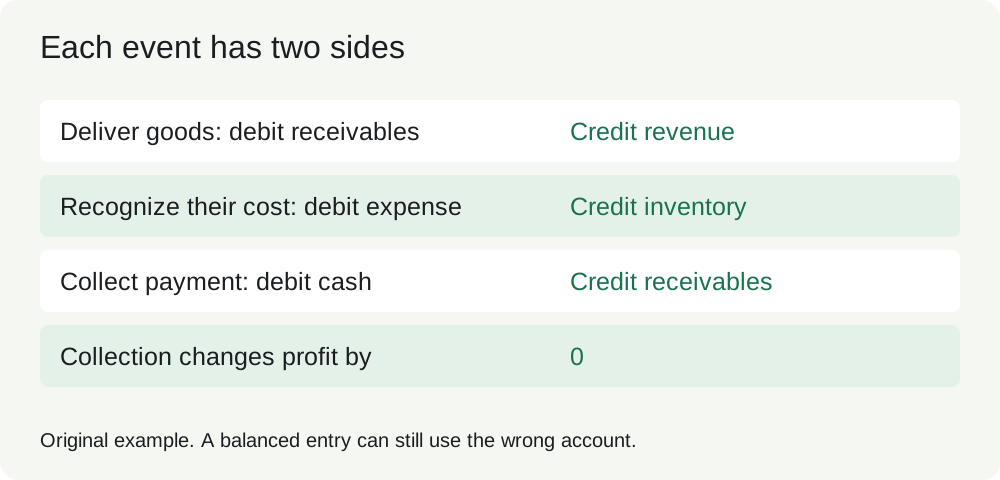
Worked check. Begin with cash 100 and share capital 100. Buy goods for 40 on credit, sell them for 100 on credit, then collect 70. Assets are cash 170 plus receivables 30 = 200. Liabilities are payables 40. Equity is contributed capital 100 plus profit 60 = 160. Both sides equal 200. Equal debits and credits establish arithmetic balance; they do not prove the chosen accounts or dates are correct.
Try it. Instead collect only 50. Record the collection entry and recompute cash and receivables before reading on.
Check your answer. Debit Cash 50, credit Receivables 50. Cash is 150, receivables 50 and total assets still 200. Profit remains 60. If profit changes, you have treated collection as another sale. Repair that entry, then repeat with a collection of 80.
Explain in one sentence: identify the business event, the two affected accounts and why cash and profit can respond differently. The IDE checks formula results; this explanation needs self-review or a tutor.