
Live
The income statement measures revenue and expenses over a period. The balance sheet measures assets, liabilities and equity at a date. The cash-flow statement explains the change in cash over the same period. A full reporting package also includes changes in equity and notes. These lessons concentrate on the three statements an analyst links in a basic model. SEC introduction
Accrual accounting records performance when the relevant recognition conditions are met. The payment date can fall earlier or later. An invoice alone does not prove revenue was earned; inspect delivery, contractual rights and the remaining obligations. In our original examples, goods have been delivered and the customer controls them, so revenue and a receivable are recognized.
Suppose delivered services earn 80, customers pay 50 and staff earn 30, of which 25 is paid. There is no tax or depreciation in this small example. Profit is 80 − 30 = 50. Operating cash is 50 − 25 = 25. Receivables rise by 30 and accrued payroll rises by 5. Starting from profit, 50 − 30 + 5 = 25 reconstructs the same operating cash.
The indirect cash-flow bridge removes noncash charges and adjusts for operating timing differences. An increase in receivables uses cash relative to recognized revenue. An increase in an operating payable preserves cash relative to recognized expense. Here and in the final case, there are no acquisitions, foreign-exchange effects or write-offs. In a real filing, those can make a raw balance-sheet change differ from the cash-flow adjustment. IAS 7 overview
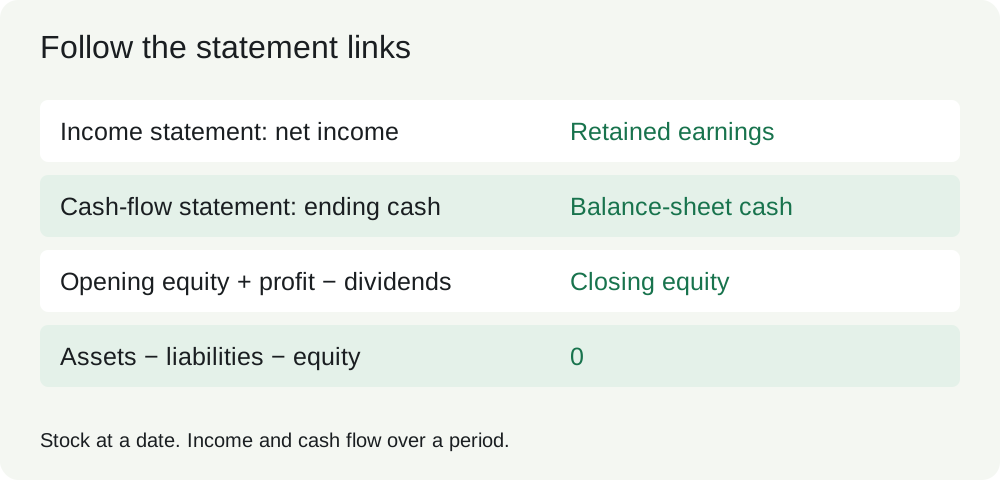
Three links should remain visible: net income feeds retained earnings, ending cash from the cash-flow statement equals balance-sheet cash, and assets minus liabilities minus equity equals zero. Retained earnings roll forward as opening retained earnings plus net income minus dividends in this simplified case. Do not change cash to make the balance sheet balance. Reconcile the error to its source.
Try it. Customers pay another 10 before period-end, with no new service. Recalculate profit, receivables and operating cash.
Check your answer. Profit remains 50. Receivables fall from 30 to 20. Operating cash rises from 25 to 35. If cash does not change, inspect the collection entry. If profit changes, inspect whether the collection was mistakenly posted to revenue.
Transfer task. If the unpaid payroll is settled next month, that payment reduces next month's cash and opening payroll liability. It does not create the same payroll expense twice. Explain which reporting period owns the work.