
Live
Outcome: specify a decision, output, boundary and time basis another analyst can challenge. Prerequisites: F02 formula fluency and basic F03 profit, cash and debt concepts.
Cedar Service is considering a small new service line. The manager asks: “Can we launch with the proposed loan and retain at least $5,000 of cash?” That is more useful than “Build a model.” It tells us which outputs matter: the lowest forecast month-end cash, extra opening funding needed, operating contribution, closing debt and uncollected revenue.
Write a model brief before adding formulas. Name the decision owner, alternative, information cutoff, period, units and exclusions. Here the alternatives are launch or do not launch. The information cutoff is 9 October 2026. The forecast begins January 2027, uses monthly periods and defaults to twelve months, with one to twenty-four supported. All amounts are nominal USD, without scaling. Service units and dollars per service are different measures. Positive costs are subtracted from revenue or cash.
The case deliberately stops short of a complete valuation or three-statement forecast. It has revenue, collections, debt and cash schedules. It excludes income tax, depreciation, inflation, inventory, payables, terminal proceeds and a revolving facility. Monthly cash can hide a cash shortfall within the month. A positive contribution does not establish project value. Those limitations shape the recommendation, rather than belonging in a footnote nobody reads.
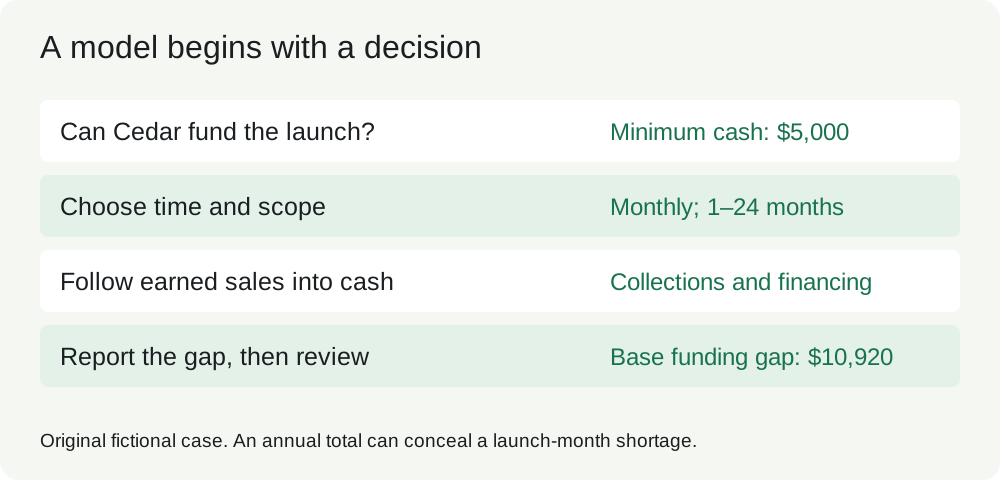
Opening cash is $6,000. Equipment costs $24,000 at launch; the proposed loan provides $12,000 at the start of month one. Base demand begins at 120 services and adds ten per month, capped at 200. Each service sells for $100 and costs $40; monthly fixed cash costs are $3,000. Seventy-five percent of current sales is collected in the month, with the rest collected next month. These are fictional teaching facts and assumptions, not a real investment opportunity.
An annual total would miss the launch-month funding problem. Daily forecasts would imply timing evidence we do not have. Monthly detail is proportionate for this first decision, followed by a separate cash-timing review before committing funds. The launch switch applies to operations, equipment and the proposed new loan together. Existing opening balances remain existing balances.
Write a five-line brief with one decision question, two alternatives, three outputs, a time basis and exclusions. Predict whether collecting revenue later changes contribution or cash.
Hint 1: begin with a decision the manager can take. Hint 2: distinguish total cash generated from the lowest balance. Hint 3: “Test whether the proposed launch stays above $5,000 at each month end; show the maximum funding deficit and its month.”
Later collection reduces early cash without changing earned revenue or contribution in this case. A horizon is a reporting choice, not an automatic liquidation date. A six-month result excludes months seven onward and retains receivables and debt outstanding at month six. Do not invent repayment or collection just because the forecast ends.
The numerical grader can check a funding calculation. It cannot decide whether $5,000 is an adequate cash floor, whether the demand forecast is credible or whether monthly resolution is sufficient. Those are design choices for review.