The size and first appearance of a balance difference are clues. Find the missing or duplicated transaction, then repair its connection across the statements.
When a balance sheet does not balance, first identify the earliest period in which assets differ from liabilities plus equity. Check that the opening position balances, then reconcile the movements into that first broken period. Changing cash or equity simply to remove the difference can conceal the underlying error.
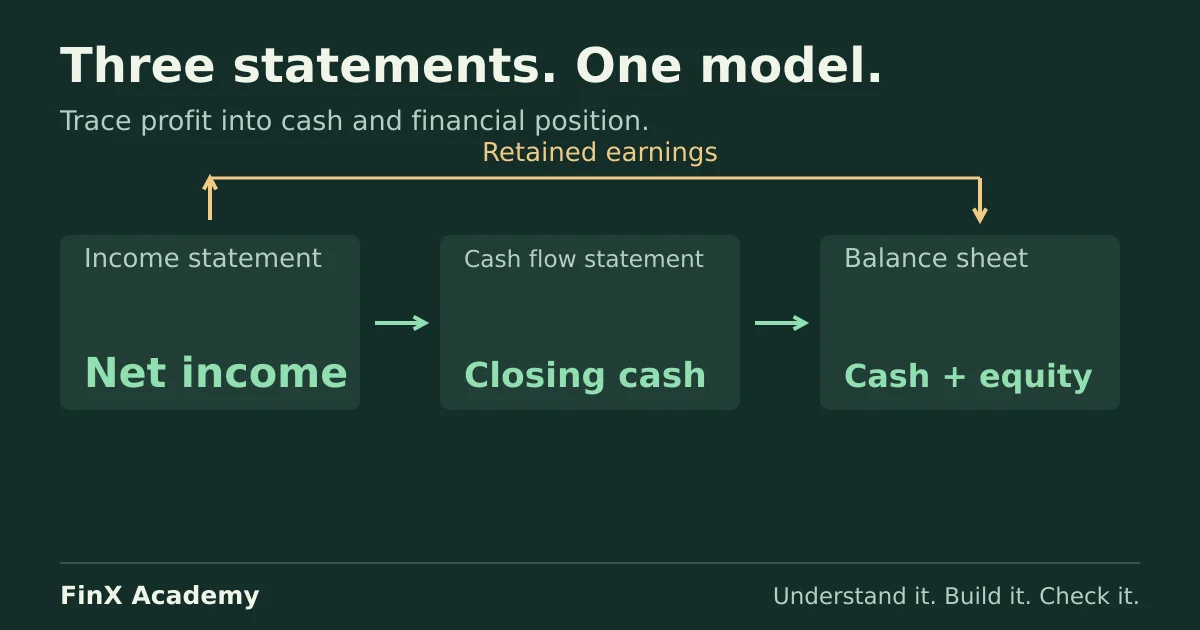
The accounting relationship is assets = liabilities + equity. Cash is one asset within that relationship; it must also agree with the cash flow statement. The SEC’s financial-statement guide explains these connections, including how non-cash depreciation and borrowing affect the cash flow reconciliation.
Start with a balanced opening position
Use this fictional business, with every amount in the same illustrative units:
| Opening balance | Amount |
|---|---|
| Cash | 40 |
| Receivables | 30 |
| Net property and equipment | 130 |
| Total assets | 200 |
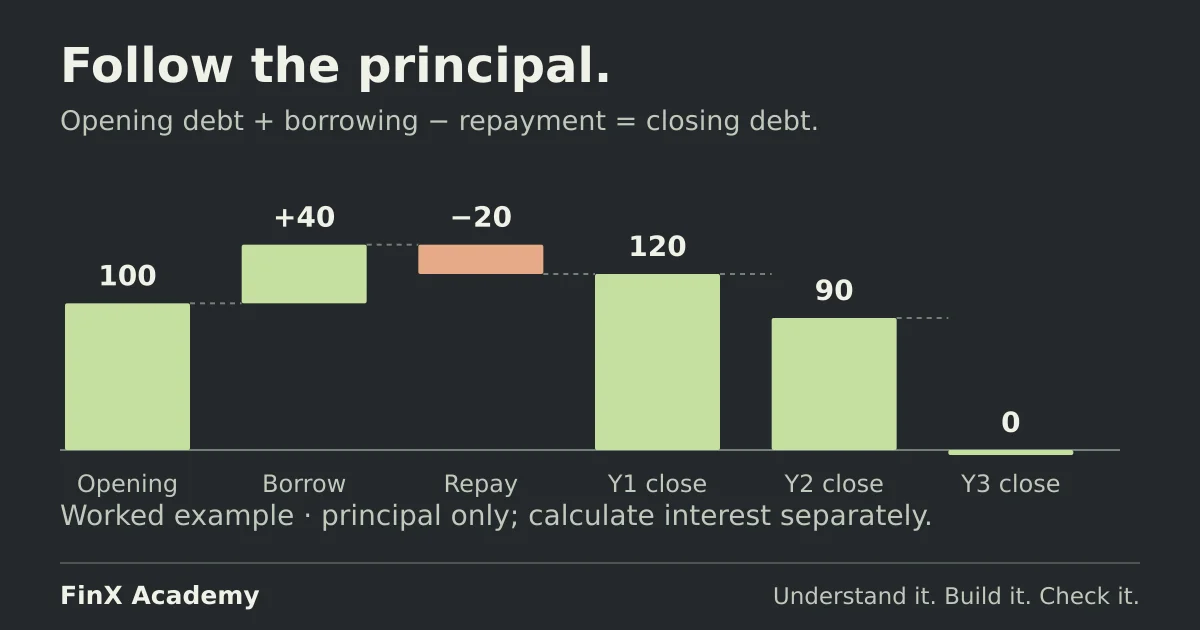
| Debt | 80 |
| Equity | 120 |
| Total liabilities plus equity | 200 |
During the year, net income is 30, depreciation is 10, receivables increase by 5, equipment purchases paid in cash are 25, and principal repayments are 15. Assume no other working-capital changes, borrowing, dividends, asset disposals or equity movements. Interest and tax, where relevant, are already included in net income and paid during the period.
An increase in receivables means some recognised revenue has not yet become cash. Depreciation reduced profit without using cash in this period. These are different adjustments, so give each its own line.
Rebuild cash from the actual movements
Enter the assumptions and formulas below in a blank worksheet. Enter expenditure and repayment inputs as positive amounts; the cash-flow formulas supply their negative signs.
| Cell | Label | Input or formula | Result |
|---|---|---|---|
| B3 | Opening cash | 40 |
40 |
| B4 | Net income | 30 |
30 |
| B5 | Depreciation | 10 |
10 |
| B6 | Increase in receivables | 5 |
5 |
| B7 | Cash equipment purchases | 25 |
25 |
| B8 | Principal repayment | 15 |
15 |
| B10 | Operating cash flow | =B4+B5-B6 |
35 |
| B11 | Investing cash flow | =-B7 |
−25 |
| B12 | Financing cash flow | =-B8 |
−15 |
| B13 | Closing cash | =B3+SUM(B10:B12) |
35 |
Now link the closing balance sheet to the same assumptions. Put the following values in column E, with labels in column D:
| Cell | Closing balance | Formula | Result |
|---|---|---|---|
| E3 | Cash | =B13 |
35 |
| E4 | Receivables | =30+B6 |
35 |
| E5 | Net property and equipment | =130+B7-B5 |
145 |
| E6 | Total assets | =SUM(E3:E5) |
215 |
| E9 | Debt | =80-B8 |
65 |
| E10 | Equity | =120+B4 |
150 |
| E11 | Liabilities plus equity | =SUM(E9:E10) |
215 |
| E13 | Balance difference | =E6-E11 |
0 |
The opening amounts are written directly into these short formulas to keep the exercise compact. In a forecast, link them to the previous period’s closing balances.
Introduce one error and trace its effect
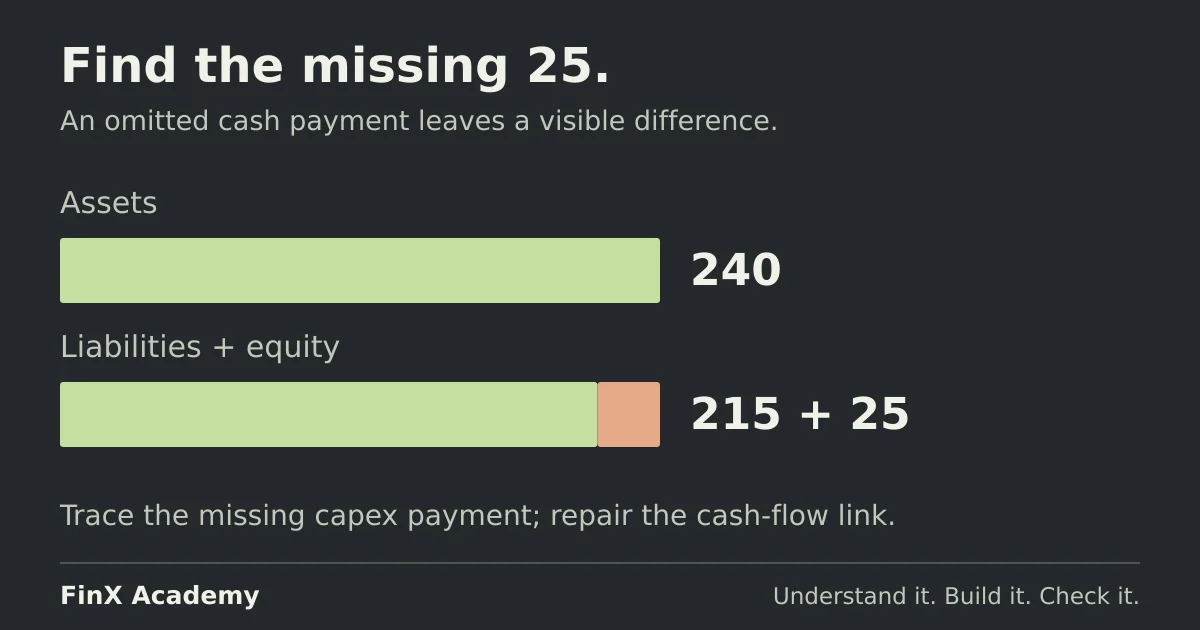
Replace B11 with zero, leaving everything else unchanged. Equipment still increases on the balance sheet, but its cash payment disappears from the cash flow statement.
Closing cash becomes 60. Total assets become 240, while liabilities plus equity remain 215. The balance difference is +25, exactly the omitted cash expenditure in this controlled example.
Restore =-B7 in B11. Closing cash returns to 35 and the check returns to zero. The correction restores the missing transaction; it does not rely on typing 35 over the closing-cash formula.
The same method helps distinguish other mistakes. Starting from the correct model, introduce only one of these errors at a time:
| Single error | Closing cash | Balance difference |
|---|---|---|
| Omit the receivables adjustment from B10 | 40 | +5 |
| Subtract principal twice in B12 | 20 | −15 |
| Omit the depreciation add-back from B10 | 25 | −10 |
An amount matching the difference is a useful lead, not proof. Several entries can share a value, and multiple errors can offset each other.
Use a repeatable diagnosis order
- Confirm the totals. Check included rows, units and signs before investigating model logic.
- Find the first broken period. A later difference may simply carry forward an earlier error.
- Reconcile individual balances. Cash, receivables, property and equipment, debt and equity each need an opening balance and explained movements.
- Inspect both sides of the suspected entry. Equipment purchases affect the asset schedule and cash. Principal repayments affect debt and cash.
- Change an input after the repair. Raise equipment purchases from 25 to 30. Cash should fall to 30, net equipment should rise to 150, and the balance difference should stay zero.
Use a rounding tolerance appropriate to the model’s units when interpreting a check. Rounding is not an explanation for a material unexplained difference, and a zero check does not validate every assumption.
Follow the connection into the next schedule
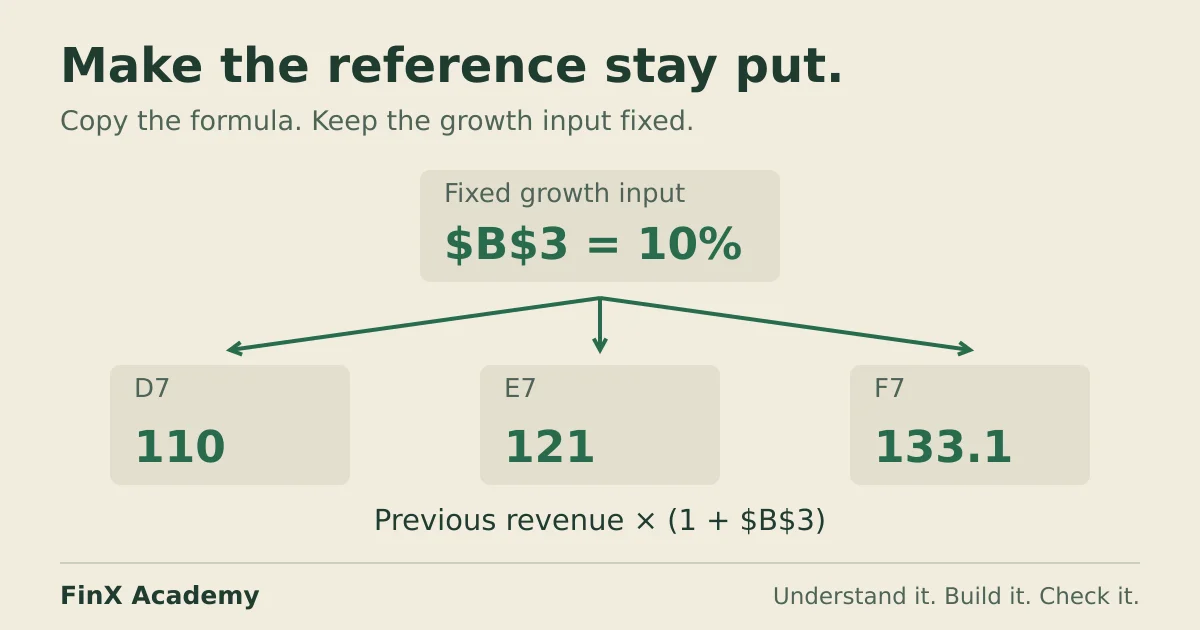
The three-statement guide explains the overall model. The debt-schedule example expands the principal and interest calculations. If the first year works but copied years break, inspect the cell references.
For structured spreadsheet exercises, browse the FinX course catalogue. It shows the available lessons and their current access requirements.
Continue with guided practice
Connect the schedules in one integrated income statement, balance sheet and cash flow model. Explore The 3-Statement Build syllabus and start with a free lesson.
The 3-Statement Build course