Define both sides of fixed-charge coverage before dividing. For a covenant, use the agreement's earnings adjustments, cash deductions, payment obligations and test period; a familiar shortcut can give the wrong compliance answer.
The fixed-charge coverage ratio (FCCR) compares a defined earnings or cash-flow measure with a defined set of fixed payment obligations. There is no single formula that applies to every loan. For a covenant test, the credit agreement specifies the numerator, denominator, adjustments and test period.
This worked case produces 1.57× under a debt-service shortcut and 1.00× under a fictional agreement definition for the same year. At a stated 1.20× minimum, the shortcut gives the wrong compliance conclusion. All figures and covenant terms below are fictional, in illustrative units.
Define the case before the formula
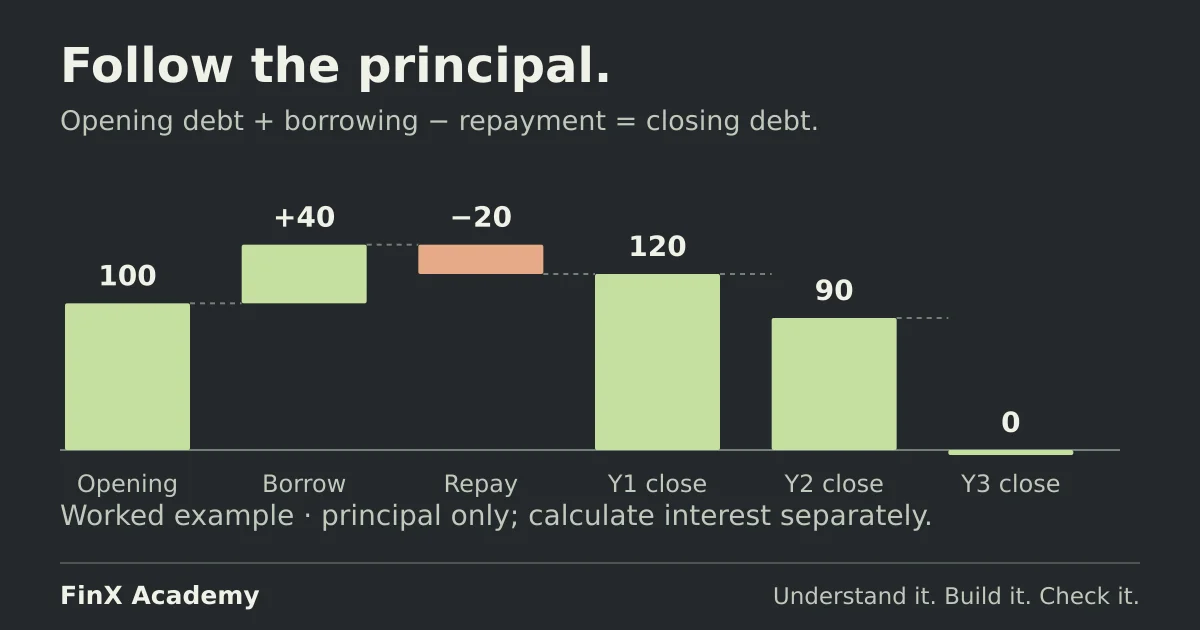
Use the borrowing mechanics from the debt schedule: opening debt 100, a 40 draw at the end of Year 1, 8% cash interest on opening debt, and repayments after interest accrues. That gives interest of 8.0, 9.6 and 7.2.
For this article, assume the contractual principal amounts due are 20.0, 30.0 and the remaining 90.0 at maturity. These equal the capped repayment amounts in the schedule. They are obligations due, not merely payments made: missing a payment would not remove it from a covenant denominator that includes scheduled debt service.
The remaining inputs are supplied assumptions:
| Input | Year 1 | Year 2 | Year 3 |
|---|---|---|---|
| Agreement-defined EBITDA, before the lease charge below | 44.0 | 48.0 | 40.8 |
| Cash income taxes | 6.0 | 6.6 | 5.4 |
| Unfinanced maintenance capex | 8.0 | 8.0 | 8.0 |
| Lease cash payments | 2.0 | 2.0 | 2.0 |
The EBITDA amounts reuse the earnings levels from the interest coverage example, with an explicit additional assumption here that the agreement measure is before the 2.0 lease charge. Cash taxes are independently supplied amounts; this is not a statutory tax calculation. Assume no dividends, no overlapping lease amounts in interest or principal, and no other covenant adjustments.
Two conventions, different answers
A quick debt-service comparison is:
Shortcut = agreement EBITDA ÷ (cash interest + scheduled principal)Our fictional FCCR definition is:
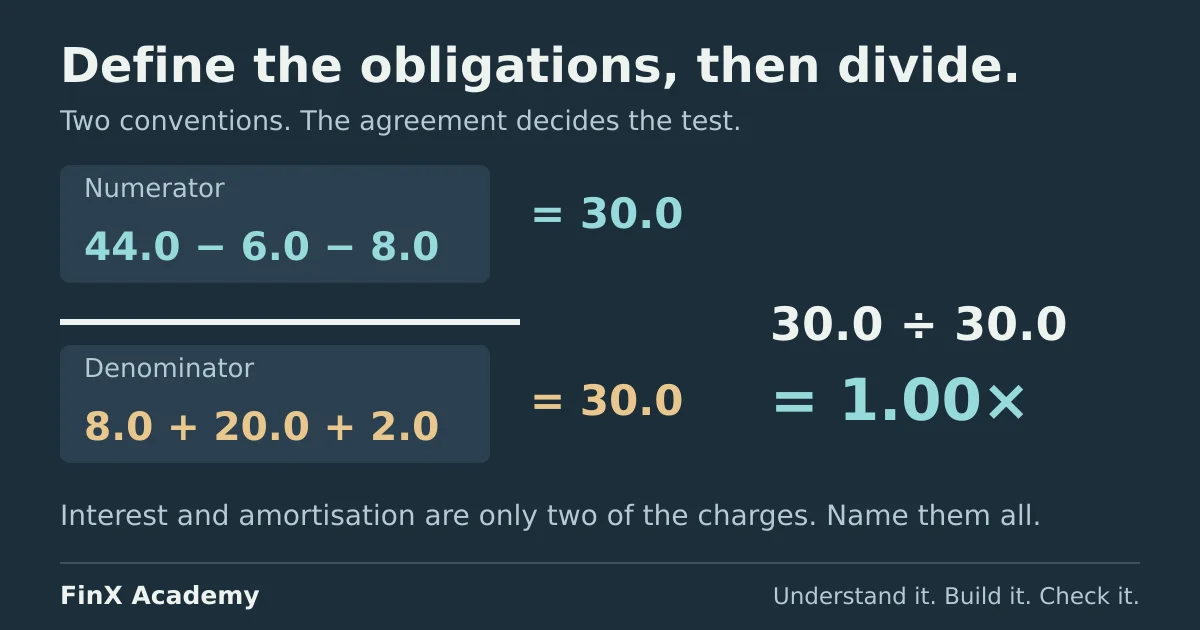
FCCR = (agreement EBITDA − cash income taxes − unfinanced maintenance capex)
       ÷ (cash interest + scheduled principal + lease cash payments)
The shortcut is useful for comparison but is not this borrower’s covenant formula. Real definitions must be read in full. For example, a 2024 SEC-filed credit amendment deducts specified maintenance capex, cash taxes and dividends, and includes scheduled debt payments and capitalized lease payments with exclusions to prevent interest being counted twice. That document supports the need to inspect definitions; it is not the contract used for this fictional case.
| Convention | Year 1 | Year 2 | Year 3 |
|---|---|---|---|
| EBITDA / (interest + principal) | 1.571× | 1.212× | 0.420× |
| Fictional FCCR | 1.000× | 0.803× | 0.276× |
Some textbook forms instead use EBIT plus rent over interest plus rent. Those require EBIT measured after that rent expense before adding it back. Do not insert a before-rent EBITDA measure into an EBIT-based formula or add back a lease charge that was never deducted.
Build the FCCR row by row
Put Years 1–3 in C2:E2, labels in column A, and enter the following rows. Copy the formulas in C7, C13 and C14 across to E:
| Row | Label | C: Year 1 | D: Year 2 | E: Year 3 |
|---|---|---|---|---|
| 4 | Agreement EBITDA before lease | 44.0 | 48.0 | 40.8 |
| 5 | Cash income taxes | 6.0 | 6.6 | 5.4 |
| 6 | Unfinanced maintenance capex | 8.0 | 8.0 | 8.0 |
| 7 | Numerator: =C4-C5-C6 |
30.0 | 33.4 | 27.4 |
| 10 | Cash interest | 8.0 | 9.6 | 7.2 |
| 11 | Scheduled principal due | 20.0 | 30.0 | 90.0 |
| 12 | Lease cash payments | 2.0 | 2.0 | 2.0 |
| 13 | Denominator: =SUM(C10:C12) |
30.0 | 41.6 | 99.2 |
| 14 | FCCR: =IF(C13<=0,"n.m.",C7/C13) |
1.000× | 0.803× | 0.276× |
A nonpositive denominator is marked not meaningful for this teaching sheet; an actual agreement can prescribe different treatment. A negative numerator with a positive denominator remains a negative ratio, not zero.
Assume the fictional agreement requires at least 1.20× for each full year. Compare unrounded results with that threshold: the borrower fails all three tests. The shortcut would appear to pass Years 1 and 2. A real covenant may use trailing twelve months, a springing test or other conditions; never substitute this annual convention without checking.
Explain the difference with a bridge
The Year 1 move from 1.571× to 1.000× has three adjustments:
| Step | Numerator | Denominator | Ratio |
|---|---|---|---|
| Debt-service shortcut | 44.0 | 28.0 | 1.571× |
| Deduct cash taxes | 38.0 | 28.0 | 1.357× |
| Deduct maintenance capex | 30.0 | 28.0 | 1.071× |
| Include lease obligations | 30.0 | 30.0 | 1.000× |
Each adjustment has a named source. If a colleague’s answer differs, compare these inputs and the contract wording. For the current covenant test, the agreed definition controls; changing that definition would require an agreed amendment.
Interpret the maturity year
Year 3 includes the final 90.0 principal payment, which drives the denominator to 99.2. The 0.276× result highlights a funding need at maturity. It does not prove that refinancing is available, and it does not establish that the operating business alone has deteriorated by the same proportion.
Possible repayment resources could include accumulated cash, asset sales, new equity or refinancing. Assess their availability separately. Include or exclude the balloon only as the agreement instructs; this case includes it.
For a descriptive three-year aggregation, sum the numerators and denominators: 90.8 / 170.8 = 0.532×. An arithmetic average of the annual ratios is 0.693×, which weights each year equally despite very different obligations. Neither aggregate replaces the three separate annual covenant tests.
Three checks before using the answer
- Reconcile the earnings definition. Start with reported EBITDA and show each permitted adjustment to agreement EBITDA, including the lease treatment. A matching label is not a reconciliation.
- Reconcile principal to the contract and schedule. In this case,
20 + 30 + 90 = 140 = 100 + 40. The source schedule’s uncapped planning inputs total 170; that is not principal actually outstanding. A total check is useful, but also inspect each year so offsetting timing errors cannot cancel out. - Count each obligation once. Trace interest, principal and lease amounts to separate source rows. If lease interest is already in cash interest, exclude that overlap from the lease line. Trace taxes and capex independently too.
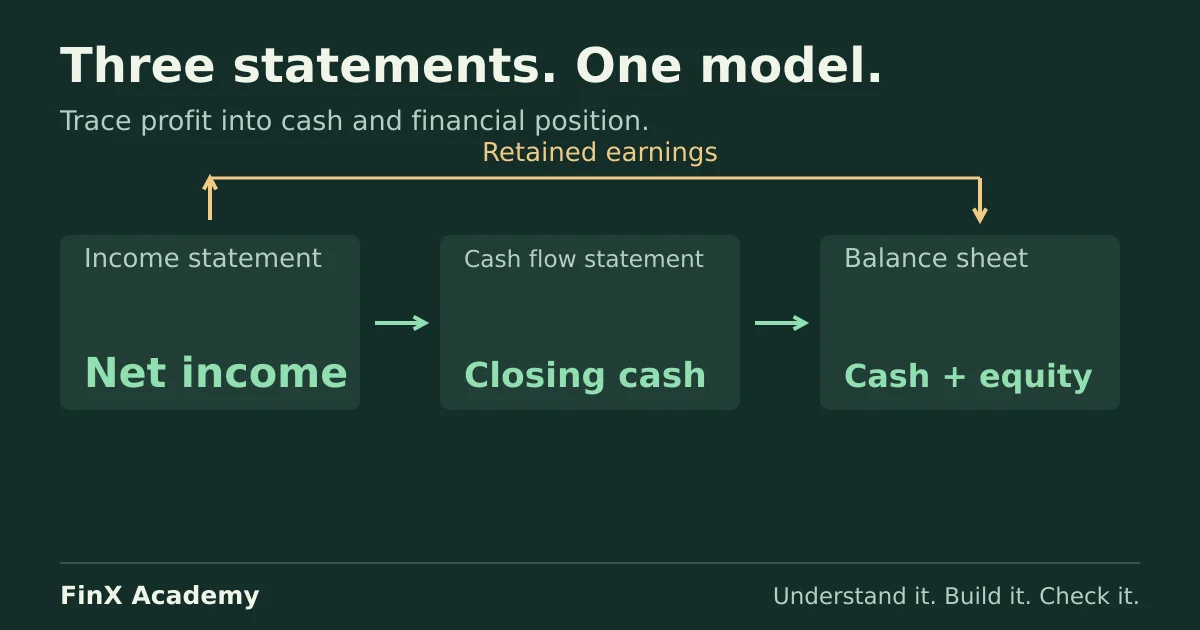
The three-statement model guide explains how the source statements and schedules connect. Passing these checks validates the stated model, not an unstated legal interpretation.
Break the calculation and quantify the error
1. Omit required maintenance capex. Year 1 becomes 38.0 / 30.0 = 1.267×, apparently passing 1.20×. Year 2 becomes 41.4 / 41.6 = 0.995×. The contract includes the capex, so the higher result cannot certify compliance.
2. Link uncapped planned principal. Use 120.0 instead of 90.0 in E11. Year 3 becomes 27.4 / 129.2 = 0.212×. The test still fails, but the denominator overstates obligations by 30.0 and no longer reconciles to funded principal.
3. Double-count the lease. Starting from the already-before-lease EBITDA of 44.0, deduct the lease in the numerator and also include it in the denominator: 28.0 / 30.0 = 0.933×. That is 0.067× below the stated 1.000× calculation. If the starting EBITDA were after lease expense instead, the reconciliation would first add back the qualifying expense; follow the actual agreement rather than applying this adjustment blindly.
The sensitivity analysis guide shows a formula-based grid you can adapt to EBITDA and capex assumptions while holding the covenant definition fixed.
Check your answers
- Shortcut: 1.571×, 1.212×, 0.420×; fictional FCCR: 1.000×, 0.803×, 0.276×.
- Numerators: 30.0, 33.4, 27.4; denominators: 30.0, 41.6, 99.2.
- All three annual FCCR tests fail the fictional 1.20× minimum.
- Three-year aggregate: 0.532×, versus a simple ratio average of 0.693×; neither is the annual compliance test.
- Errors: omitted capex 1.267× in Year 1; excess principal 0.212× in Year 3; double-counted lease 0.933× in Year 1.
Build the supporting schedules next
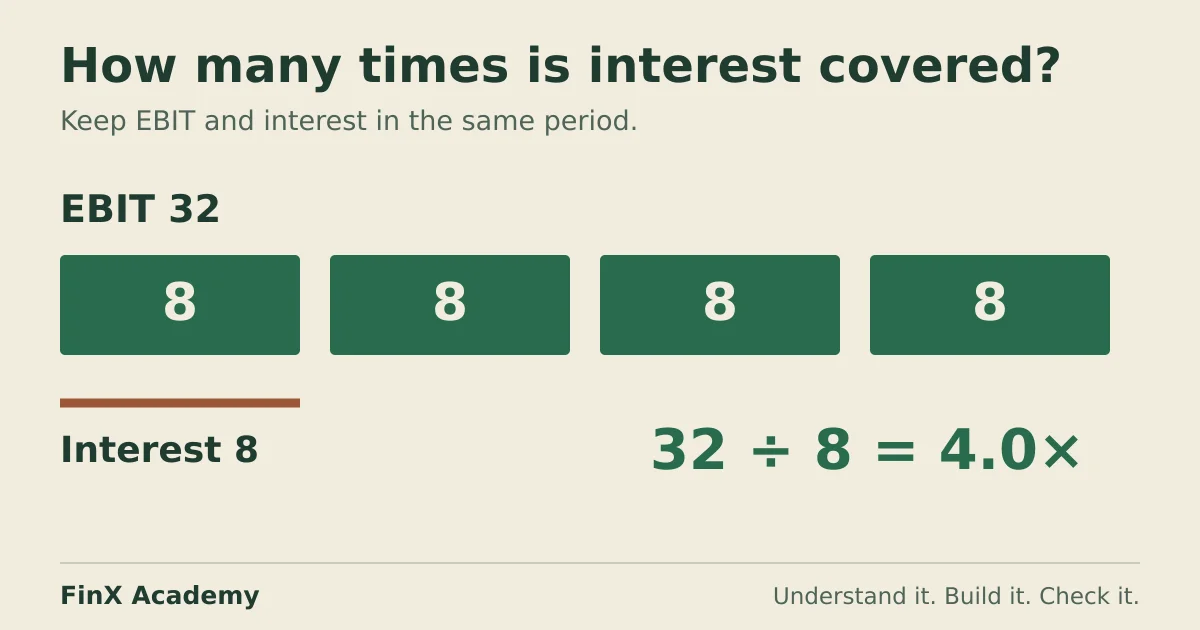
Use the interest coverage guide for earnings relative to interest alone, the debt schedule guide for borrowing and repayment timing, and the three-statement model to connect the inputs. FinX’s Three-Statement Build course includes debt-schedule practice; browse the catalogue for the current syllabus and access requirements. The free five-question diagnostic marks numeric modelling answers; it does not grade covenant definitions.
Continue with guided practice
Connect the schedules in one integrated income statement, balance sheet and cash flow model. Explore The 3-Statement Build syllabus and start with a free lesson.
The 3-Statement Build course